


Central Asia for TEFL: Uzbekistan, Kyrgyzstan, Kazakhstan and Tajikistan Compared
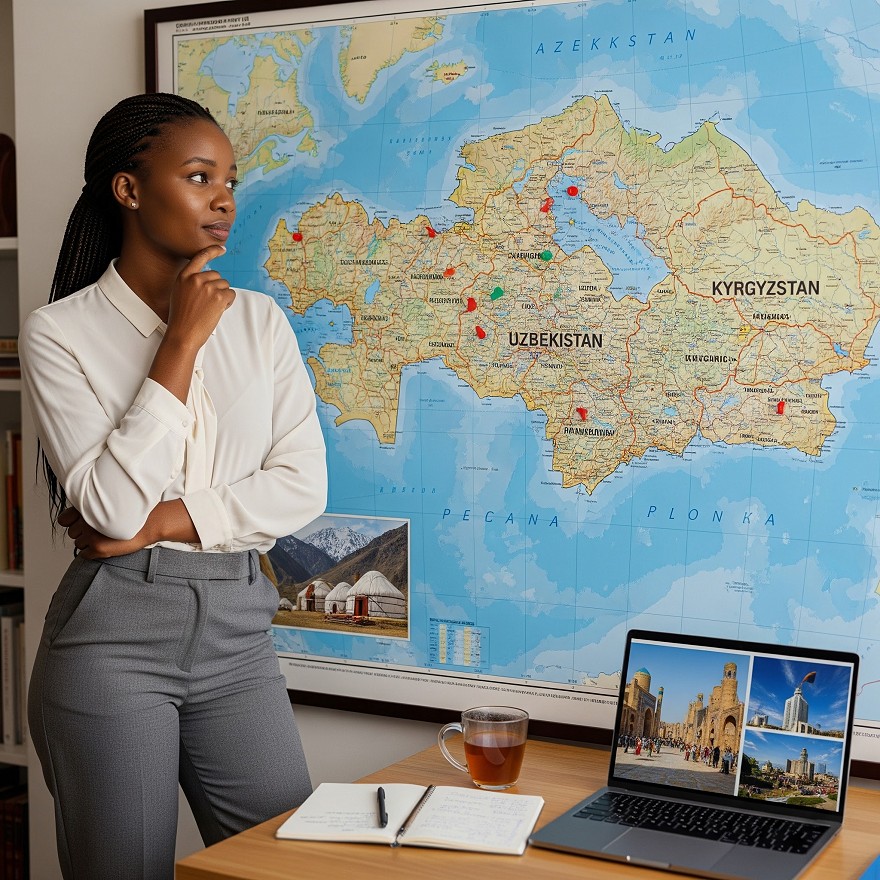
Ask ten English teachers where they would go in Asia and most will reach for the same handful of answers, Vietnam, Thailand, South Korea, maybe China or Japan. The region those answers leave out is one of the most interesting things happening in TEFL right now: Central Asia. Four countries; Uzbekistan, Kazakhstan, Kyrgyzstan and Tajikistan, sit along the old Silk Road, each with its own pace, pay and lifestyle, and each opening up to foreign English teachers at a speed the rest of Asia has not seen in twenty years.
If you are considering Central Asia, you are already ahead of the curve. The question is which country actually fits the year (or three) you want to spend there. We place teachers in this region for a living, so this is the unvarnished version, what each country pays, what it costs to live there, what the classrooms are like, and who each one suits best.
The thirty-second version
Before the detail: if you want the strongest job market, the best salary-to-cost ratio, and the most accessible visa, Uzbekistan is the obvious answer in 2026. Kazakhstan pays more on paper but costs much more to live in, and the well-paid roles want serious qualifications. Kyrgyzstan is the budget traveller's pick, beautiful, cheap, but with a thinner job market. Tajikistan is for the genuinely adventurous; the rewards are unique but the infrastructure is the most basic of the four.
Uzbekistan: the engine of Central Asian TEFL
Of the four, Uzbekistan is where the real demand sits. Since 2016, the country has gone through one of the fastest top-down English-language pushes anywhere in the world. The President's office set explicit targets to make English a working second language, the Presidential Schools network was built from scratch to offer bilingual education, and ordinary state schools are hiring native speakers at a scale that did not exist a decade ago. Private language academies, university English departments, and corporate training all sit on top of that.
For teachers, this translates into three concrete things. First, there are jobs, placements are not scarce or seasonal in the way they can be in smaller markets. Second, the contracts have stabilised: twelve-month terms with paid accommodation, return flights, and visa sponsorship are now standard with serious employers. Third, Uzbekistan recognises basic TEFL certification (120 hours) and a bachelor's degree, you do not need a CELTA or a master's to get hired, although they will open doors at the more prestigious schools.
Salaries typically run between $1,500 and $2,500 USD per month for entry-level public-school placements, with experienced teachers and university roles reaching $3,500 and above. The number looks modest until you realise what it buys: a meal at a decent restaurant in Tashkent runs around $5–$8, a one-bedroom flat in a central neighbourhood is $300–$500 (often covered by your contract), and a Yandex Go across the capital costs less than a sandwich back home. We have covered the real maths in detail in our Uzbekistan salary guide for 2026 - teachers we place commonly save between $500 and $900 a month on a public-school salary.
The country itself is one of the genuine surprises of teaching in Asia. Tashkent is a leafy, modern capital with a metro system that is a tourist attraction in its own right; Samarkand and Bukhara are Silk Road cities in the literal sense, with the architecture to match; and the food, particularly the plov and the bread, becomes its own reason to stay. We get into the daily texture of life in our guide to living in Samarkand and Tashkent.
Culturally, Uzbekistan is a moderate Muslim country. Tashkent is visibly secular, people drink, women in jeans are the norm, and the social code for a foreign teacher is closer to Istanbul than Riyadh. Russian remains the working language between strangers; Uzbek is the language of home. You do not need either to teach, but a hundred words of either makes life dramatically easier inside the first month.
The downsides are real but manageable. Winters are properly cold (-5°C and below is not unusual), summers are properly hot (40°C in July is the norm rather than the exception), and bureaucracy still moves at its own speed. Direct flights from Western Europe exist but are not daily; from North America and Australasia, you will change in Istanbul, Dubai or Seoul.
Who Uzbekistan suits: First-time TEFL teachers who want a substantial salary, a real classroom job, and the chance to live somewhere most of their friends have not even heard of. Also experienced teachers tired of the saturated markets in Vietnam and South Korea.
Kazakhstan: higher pay, higher cost, smaller window
Kazakhstan is the wealthiest of the four by a long way, and on paper it offers the best salaries. International schools in Almaty and Astana can pay $2,000 to $3,500 USD per month, sometimes with housing on top. The oil-and-gas wealth of the country supports a real upper-middle class, and that class wants its children speaking English to a high standard.
Then the asterisks. Those salaries are heavily concentrated in international schools and the Nazarbayev Intellectual Schools network, both of which want experienced teachers with a PGCE, QTS, or a CELTA plus at least a couple of years in the classroom. The entry-level market, language academies, public schools, smaller private institutions, pays closer to $800–$1,200 USD, which sounds fine until you start spending tenge.
Almaty is one of the more expensive cities in the post-Soviet world. A central one-bedroom apartment runs $600–$900 a month, dinner out is $15–$25, and a basic supermarket shop will feel familiar to anyone who has lived in a mid-tier Western European city. Astana is slightly cheaper but also has the climate of inner Mongolia, -30°C in January is normal, not unusual.
The visa picture is mixed. Many nationalities (UK, US, EU, Australia, Canada) can enter for thirty days visa-free, which makes interview trips easier than for Uzbekistan, but you still need a full work permit to be employed legally, and the timelines on those have lengthened since 2023.
Linguistically, Kazakhstan is the most Russian-dominant of the four. Younger Kazakhs increasingly speak Kazakh, but Russian is the default in business, retail and most schools outside the Kazakh-language stream. If you have already studied Russian, this is the country where it pays off most.
Who Kazakhstan suits: Experienced teachers with strong qualifications who want a high-quality, internationally-recognised teaching job and do not mind that their savings will not be dramatic. Less ideal for teachers prioritising savings or a first overseas role.
Kyrgyzstan: the affordable, beautiful outlier
Kyrgyzstan is the country travellers fall in love with and teachers underestimate. The job market is genuinely smaller than Uzbekistan's or Kazakhstan's, there are fewer schools, fewer recruiters, and fewer sponsored visa packages, but the country itself is one of the most rewarding places to live on the continent, and salaries go further than the topline numbers suggest.
Expect $400–$900 USD per month for most teaching jobs, with a few international school positions reaching higher. The cost of living is the lowest of the four for urban living: a comfortable apartment in Bishkek runs $250–$400, a meal at a sit-down restaurant is $4–$6, and a marshrutka (shared minibus) across the city is the price of a stick of gum. Teachers who plan carefully can still save $200–$400 a month, but Kyrgyzstan is rarely chosen for the money.
It is chosen for the mountains. Bishkek sits in the shadow of the Ala-Too range; Lake Issyk-Kul, the second-largest alpine lake in the world, is two hours away; and the trekking, horse-riding and skiing on offer are among the best in Asia. The country is also the most politically liberal of the four, protests are legal, presidents have been peacefully voted out, and the visa policy reflects that openness. Most Western nationalities get sixty days visa-free, and the work permit process is lighter than in neighbouring countries.
The downsides are infrastructural. Bishkek's air quality in winter is poor, electricity outages happen, and the formal education sector is smaller and less resourced than in Uzbekistan or Kazakhstan. You will find more NGO and volunteer placements than career-track ones.
Who Kyrgyzstan suits: Teachers who want to combine work with serious outdoor adventure, who are not relying on the year for savings, and who are comfortable with a smaller, more improvised expat scene.
Tajikistan: the road less travelled
Tajikistan is the smallest TEFL market of the four and the hardest to recommend without caveats, but for the right person, it is unforgettable. The country sits in the Pamirs, has Persian rather than Turkic roots, and has the most distinct culture in the region. Dushanbe is small, walkable, and surprisingly green; the rest of the country is among the most mountainous on earth.
Teaching jobs exist but are concentrated in a handful of international schools, the Aga Khan-supported University of Central Asia in Khorog, and a thin private-academy market. Salaries are the lowest of the four, $300–$700 USD for most roles, with international schools paying more, and infrastructure is the most basic. Power cuts in winter are routine outside Dushanbe, internet is patchier, and imported goods are expensive.
The visa process has improved with the e-visa system, but work permits still require a sponsoring employer and the pool of those is small. Russian remains widely spoken in cities; Tajik (a Persian dialect, closer to Iranian Farsi than to Uzbek or Kazakh) dominates outside them. Culturally, Tajikistan is more conservative than Uzbekistan or Kazakhstan, alcohol is available but less prominent, dress codes are noticeably more modest, and the country's proximity to Afghanistan means certain southern regions are off-limits to foreigners.
Who Tajikistan suits: Genuinely adventurous teachers, often with previous overseas experience, who are drawn to the Pamirs, Persian culture, or development-sector work. Not a first posting.
Side by side
It is worth pulling the four countries together on the points that matter most when you are choosing.
On salary, Kazakhstan tops the headline numbers, international schools there pay between $3,000 and $4,500 USD a month - but entry-level work pays $800 to $1,200. Uzbekistan sits in a tighter, more reliable band of $1,800 to $3,500 for entry-level public-school roles, with experienced teachers reaching $2,500 and above. Kyrgyzstan pays between $400 and $900 for most jobs, and Tajikistan between $300 and $700.
On realistic savings, the order flips. Uzbekistan is the clear leader, with most teachers we place saving $500 to $900 a month. Kazakhstan tends to deliver $200 to $500 saved despite the higher salary, because Almaty and Astana eat into the pay quickly. Kyrgyzstan yields $100 to $400, and Tajikistan $50 to $300.
On cost of living, Kyrgyzstan is the cheapest day-to-day, with Uzbekistan close behind. Tajikistan looks cheap on paper but imported goods and winter heating push the real cost higher than expected. Kazakhstan is the most expensive by a margin, particularly in Almaty.
On the job market, Uzbekistan has the deepest and most accessible pool of roles - public schools, Presidential Schools, private academies and universities all hiring at scale. Kazakhstan has plenty of jobs at the international-school top end but a thinner middle. Kyrgyzstan is a moderate market dominated by language academies and NGOs. Tajikistan is the most limited, with a handful of viable employers.
On entry requirements, Uzbekistan is the most welcoming to first-time teachers, a bachelor's degree and a 120-hour TEFL certificate is enough for most roles. Kazakhstan's better-paid positions expect a CELTA, a PGCE or equivalent, plus classroom experience. Kyrgyzstan and Tajikistan are both flexible, but the lower bar reflects a smaller, less competitive market.
On visas, Uzbekistan operates a sponsored work visa system that the employer drives - straightforward but employer-dependent. Kazakhstan offers thirty days visa-free entry for many Western nationalities, useful for interview trips, but still requires a full work permit to be employed. Kyrgyzstan gives sixty days visa-free and has the lightest work permit process of the four. Tajikistan uses an e-visa plus a work permit tied to your sponsoring employer.
On working language, Russian remains the urban lingua franca everywhere. Uzbek is the language of home and rural life in Uzbekistan, Tajik (a Persian dialect) in Tajikistan, and Kazakh and Kyrgyz are steadily rising in their respective countries. You do not need any of them to teach, but Russian opens the most doors quickest.
On cultural feel, Uzbekistan is a moderate Muslim country with visibly secular cities; Kazakhstan feels the most Russian-influenced and Western-urban; Kyrgyzstan is the most politically and socially liberal, with a strong outdoor culture; Tajikistan is the most conservative, with closer ties to Persian and Afghan cultural norms.
In one line each: Uzbekistan suits career-track TEFL teachers who want strong savings. Kazakhstan suits experienced teachers chasing international school roles. Kyrgyzstan suits teachers prioritising lifestyle and adventure over income. Tajikistan suits the genuinely intrepid, usually as a second posting.
Which one is actually right for you?
If you want the most reliable combination of salary, job availability and quality of life, and you want to start within the next twelve months, Uzbekistan is the answer for most teachers. The infrastructure is there, the contracts are real, and the country is at a moment that will not last forever: still affordable enough to save serious money, but developed enough to live comfortably. Five years from now, the salary-to-cost ratio will almost certainly have narrowed.
If you have already got several years of teaching behind you, a strong qualification (CELTA, PGCE, or a master's in TESOL), and you want a credentialed international school role on your CV, Kazakhstan rewards that profile better than its neighbours. Just go in with realistic expectations about how much of the salary you will keep.
If teaching is part of a wider lifestyle goal, climbing, riding, photography, learning Russian, being in the mountains, Kyrgyzstan punches above its weight. You will not get rich, but you will likely have a year you remember more vividly than your peers in Hanoi or Seoul.
And if none of the above is quite weird enough for you, Tajikistan is waiting. We would gently suggest a year in Uzbekistan or Kazakhstan first, but it is a real option for a second posting.
How we can help
We place English teachers across Central Asia, and Uzbekistan is the country where we currently have the most live roles - public schools, Presidential Schools, private academies, and university placements, with contracts that include accommodation, flights and visa sponsorship. If you are TEFL-certified (or willing to get certified) and hold a bachelor's degree, the application is straightforward and the placement timeline is usually six to ten weeks.
Have a look at our current Uzbekistan placements, drop us a line and we will come back to you the same week.
Categories
- Argentina (3)
- China (13)
- Ecuador (1)
- Guest posts (11)
- India (1)
- Japan (6)
- Korea (9)
- News (9)
- Spain (2)
- TEFL (55)
- Thailand (6)
- Tips (58)
- Vietnam (3)
- Teach English abroad without a degree (1)
- Where to teach English abroad (2)
- Teach in Japan (4)
- Colombia (3)
- Brunei (1)
- Taiwan (2)
- Hong Kong (2)
- Online (2)
- Italy (2)
- Peru (1)
- Canada (2)
- Cambodia (3)
- Indonesia (1)
- Uzbekistan (4)